

Source: https://historyplex.com/japanese-traditional-clothing
The traditional dresses of Japan have been an interest for a long time as they have a long history of wearing their own very unique cultural fashion. If we were to travel to Japan today, we might be disheartened to find that most Japanese streets would be filled with western-style clothing or yofuku (Facts about Japan). Japanese traditional clothing is not only known for its culture to the country, but its high stature of very detailed work, a woman’s marital status, and position concerned in society. When it is worn, even a small flaw in how you arrange or choose the clothing is considered a large insult or even a sign of disrespect.
Source: https://historyplex.com/japanese-traditional-clothing
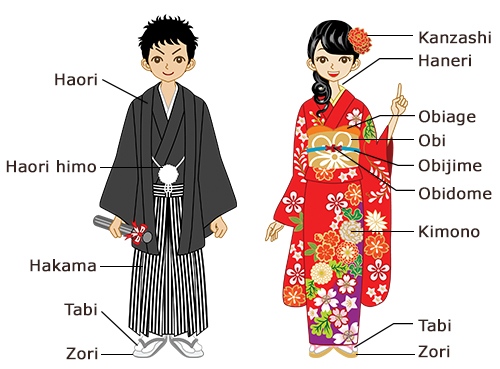
The Japanese kimono and yukata are the two most commonly worn garments in the country of Japan. There are many pieces that are involved in completing the look of the kimono.
The kimono is a full-length robe made of soft silk, that can be worn by men and women. Men usually wear a very subtle color like black or brown, while there are about 9 to 10 different designs and colors for women. This usually depends on many different factors, such as her marital status, age, type of color used, symbolism, and the occasion.
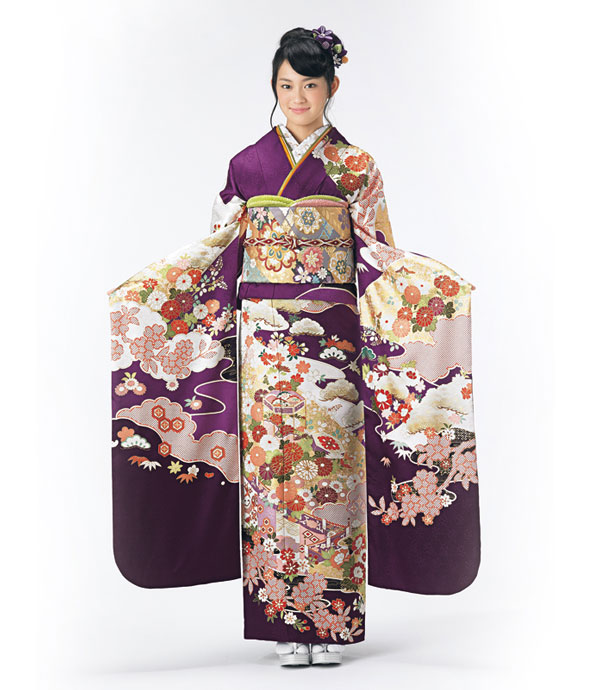
This kimono called furisode is made for a single, unmarried Japanese woman. The name furisode means for “swinging sleeves.” This is because the sleeves are about 110 cm in length (Lad).
Source: https://www.japan-talk.com/jt/new/kimono-layers
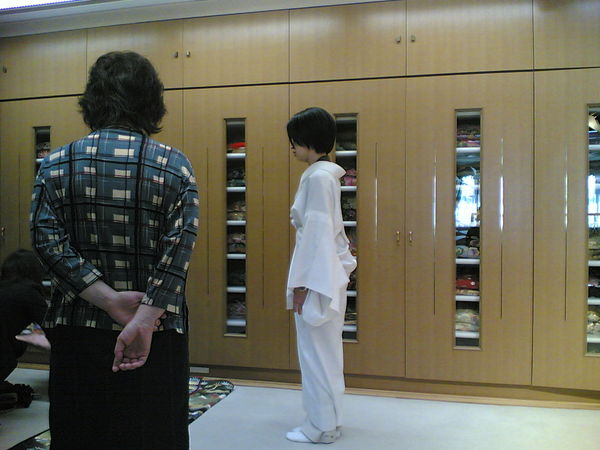
Kimono dresses have many garments that help make it fully traditional. A kimono is very hard to clean because they are pure silk, so to help the kimono not get dirty, the Japanese often wear a garment underneath the kimono called a nagajuben. A nagajuben is machine washable and most have a replaceable collar to help the nagajuben match the kimono that will be worn. This replaceable collar is called a haneri (Japan-Talk).
Another garment that can make up a kimono is called a haori which is a formal, loose-fitting, knee-length coat. Another benefit to a haori is that they can keep the kimono clean. This coat was originally only worn by men but in modern times is now also worn by women. Another important part that goes with the haori is called a haori himo which is a woven string that ties up and keeps the haori together.
Source: https://www.japan-talk.com/jt/new/kimono-layers
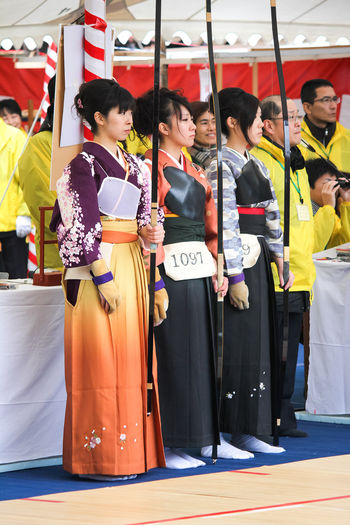
A hakama is a wide-pleated, ankle-length skirt that has 7 pleats, 5 in the front and 2 in the back. They are always worn over a kimono. Traditionally a hakama was tied around the waist over a sash called an obi with ribbons. Ancient Japanese Samurais wore these hakamas so that their opponents in war could not see their footwork. Traditionally these were only worn by men, but now these hakamas can be found on women, especially for kyudo (martial arts) (Lad).
Source: http://www.texancultures.com/object-obi-2/
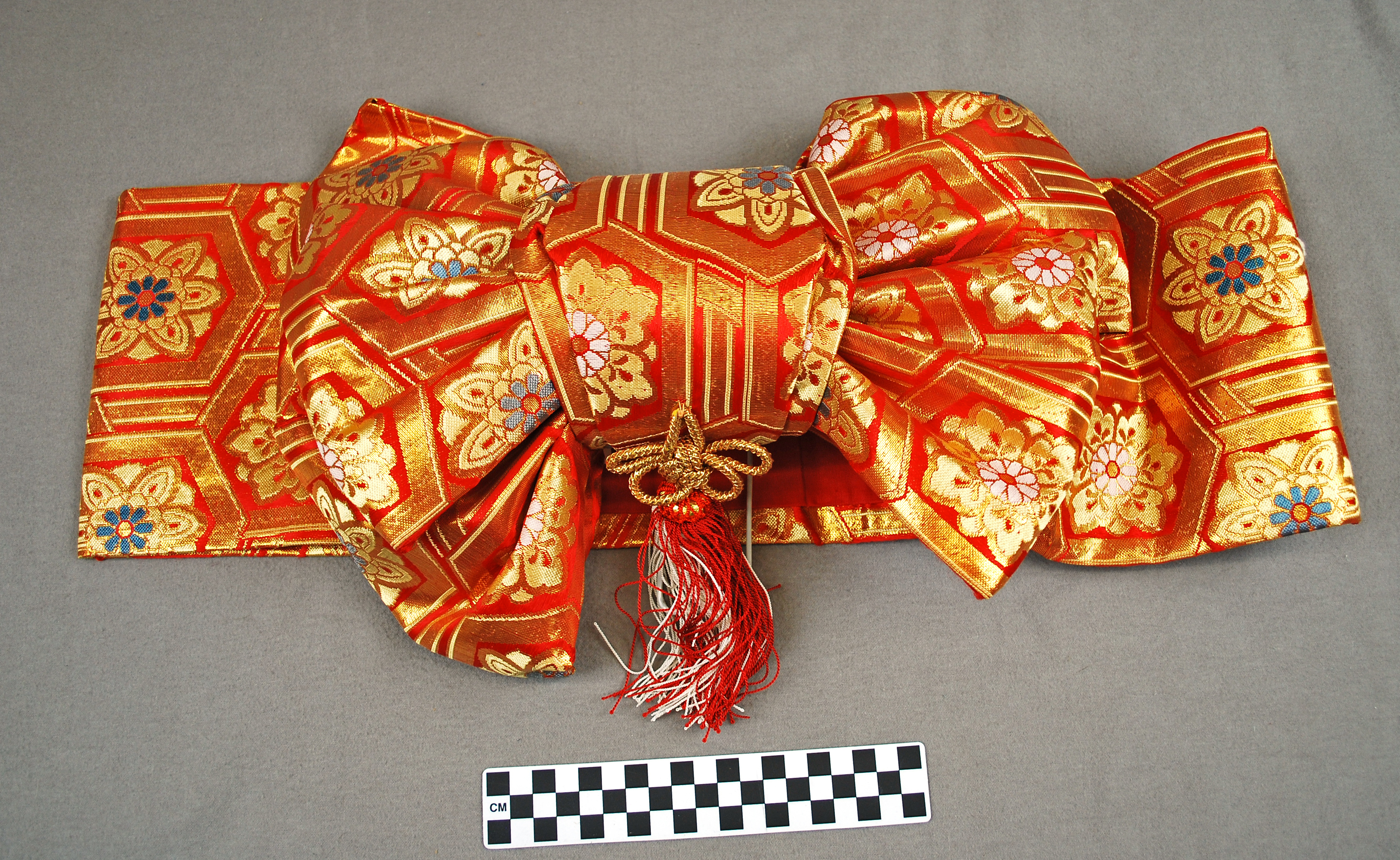
An obi is a large sash used to keep a kimono in place. Men usually have a thinner, subtler obi than women. Women’s are thicker, more decorative, and have many more ways to tie their obi than men (All About Japan). Obis can be tied in many different knots, each having a certain meaning. In ancient times, the knots were thought to keep evil spirits away. We also see that the color of the obi is how Japanese martial arts show the rank of the individual (Lad).
Source: Clyne, https://www.pbase.com/image/123576358
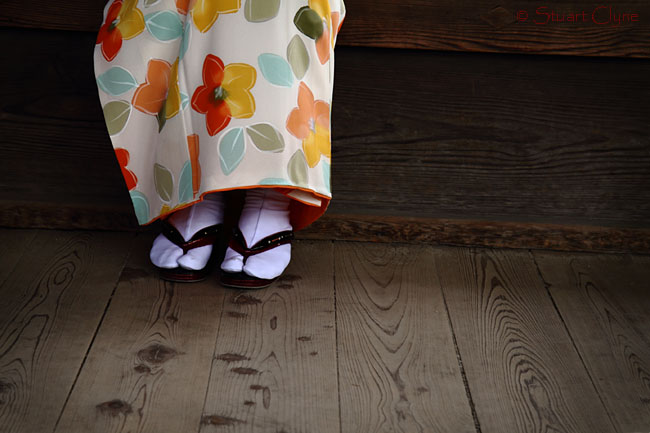
Tabi are traditional socks worn by men and women. They have a separation between the big toes and the other toes. These are paired with sandals called zori. These form a large part of Japanese tradition. They are made of either rice straw, leather, plant fibers, or cloth. These sandals are flat and worn with the kimono (Lad).
Source: http://onlynativejapan.com/2013/05/24/kanzashi-the-japanese-traditional-fashion-for-hair-for-women/2783
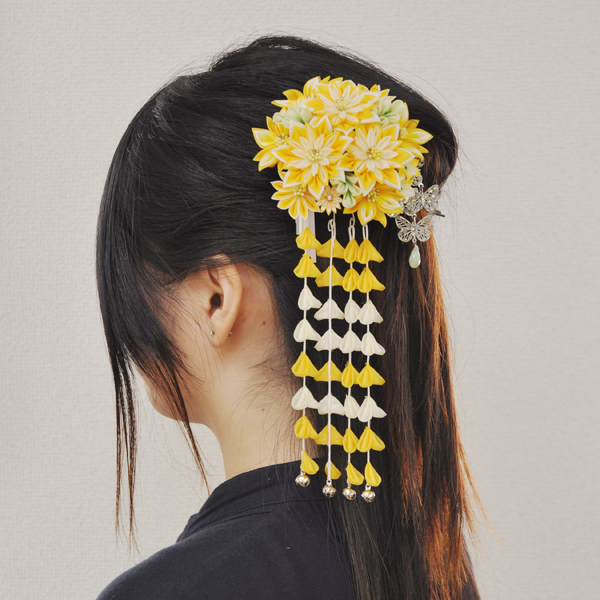
Kanzashi is a beautiful hairpiece worn by women when wearing a kimono. The appearance and color changes per month or season of the year. It was once thought to ward off evil spirits but changed to a fashion statement as time passed (Only Native Japan).
Source: https://www.kimono-yukata-market.com/
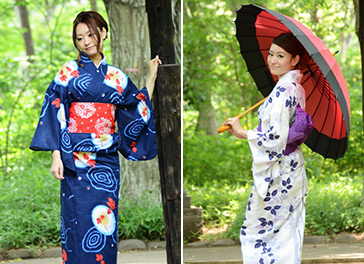
A yukata is a kimono-like robe. A yukata is worn in the summertime, as it is made of cotton and unlined, which makes it much more breathable. An obi is worn to secure the yukata in place. These were originally designed for the noble to wear to and from their baths since bath towels were not yet used in Japan. They since have become a casual version of the kimono and are used in summer events. With the yukata, the choice of shoe would be a geta, a much more casual version of the zori. The geta is an all season sandal made of wood (From Japan).
We see how much effort and beauty there is just from Japanese traditional clothing. This is only one of the many things that makes Japan’s culture so beautiful, intricate, and unique.
Work Cited
“All about Kimono and Yukata: The Differences, How to Wear & Buy.” From Japan, June 17, 2015, https://blog.fromjapan.co.jp/en/fashion/all-about-kimono-and-yukata-the-differences-how-to-wear-buy.html, Date Accessed: Feb 19, 2019.
Clyne, Stuart. “Tabi socks and Zori.” Clyne, March 20, 2010, https://www.pbase.com/image/123576358, Date accessed: Feb 19, 2019
“Japanese Tradition Clothing.” Facts About Japan, http://www.facts-about-japan.com/clothing.html, Date accessed: Feb 19, 2019
Lad, Kashmira. “In Love With Traditional Japanese Clothing? You’re Not Alone.” HistoryPlex, March 22, 2018, https://historyplex.com/japanese-traditional-clothing, Date accessed: Feb 19, 2019
“Object: Obi.” UTSA Institute of Texan Cultures, http://www.texancultures.com/object-obi-2/, Date accessed: Feb 19, 2019
Spacey, John. “10 Kimono Layers.” Japan Talk, July 30, 2014, https://www.japan-talk.com/jt/new/kimono-layers, Date accessed: Feb 19, 2019
“Yukata Kimono for Women” Kimono Yukata Market Sakura, https://www.kimono-yukata-market.com/#top, Date accessed: Feb 19, 2019
Yuki, Ling. “10 Different Types of Kimono for Women” tsungagu Japan, Aug 24, 2018, https://www.tsunagujapan.com/10-different-types-of-kimono-for-women/, Date accessed: Feb 19, 2019

 Nippon Nuances